
Why Checklists Never Go Away, Even for Experienced Pilots
New students sometimes assume checklists are mainly a training tool, something you use early on until you know the airplane well enough to skip ahead from memory. But that's not how professional aviation actually works.
Airline captains with tens of thousands of hours still run full checklists on every single flight. Corporate pilots, charter operators, military aircrews, all of them do the same thing. The checklist isn't a training wheel. It's a permanent part of how professional flying works, at every experience level, on every kind of aircraft.
The reason comes down to consistency. A checklist protects against small, easy-to-miss mistakes that don't seem like a big deal in the moment but can have bigger consequences down the line. It gives every flight the same reliable structure, regardless of how familiar the aircraft feels or how many times you've flown it before.
What Checklists Actually Protect Against
A lot of what a checklist catches isn't dramatic. It's the small, easy-to-overlook items that don't feel urgent in the moment but matter a lot cumulatively.
Fuel selector position. Trim setting before takeoff. Mixture set correctly for the field elevation. Flaps at the right setting for the phase of flight. None of these individually feels like a big deal, and that's exactly why they're easy to miss without something forcing you to verify them.
Checklists also protect against interruption, which is one of the most common ways small mistakes happen in real flying. If a pilot is halfway through a pre-flight sequence and gets interrupted by a radio call, a question from a passenger, or a change in the flight plan, it's easy to lose their place and skip a step entirely if they're working from memory alone. A checklist gives you a physical or visual marker to return to, so an interruption doesn't mean losing track of what's already been done.
Checklists Are Aircraft-Specific, Not Universal
One thing new students sometimes don't realize right away is that a checklist isn't a generic aviation document. It's built specifically around the systems, layout, and procedures of one particular aircraft.
A Cessna 172's checklist accounts for its specific fuel system, its specific avionics setup, and its specific engine start procedure. A Cirrus SR20 checklist looks meaningfully different because of its side-yoke layout, its parachute system, and its glass cockpit configuration. A Piper Aztec, with two engines instead of one, has entirely different considerations around engine-out procedures and systems management.
This is part of why moving to a new aircraft always comes with a new checklist, even for pilots with plenty of experience elsewhere. Familiarity with flying in general doesn't substitute for familiarity with that specific airplane's systems and procedures, and a checklist is what bridges that gap safely.
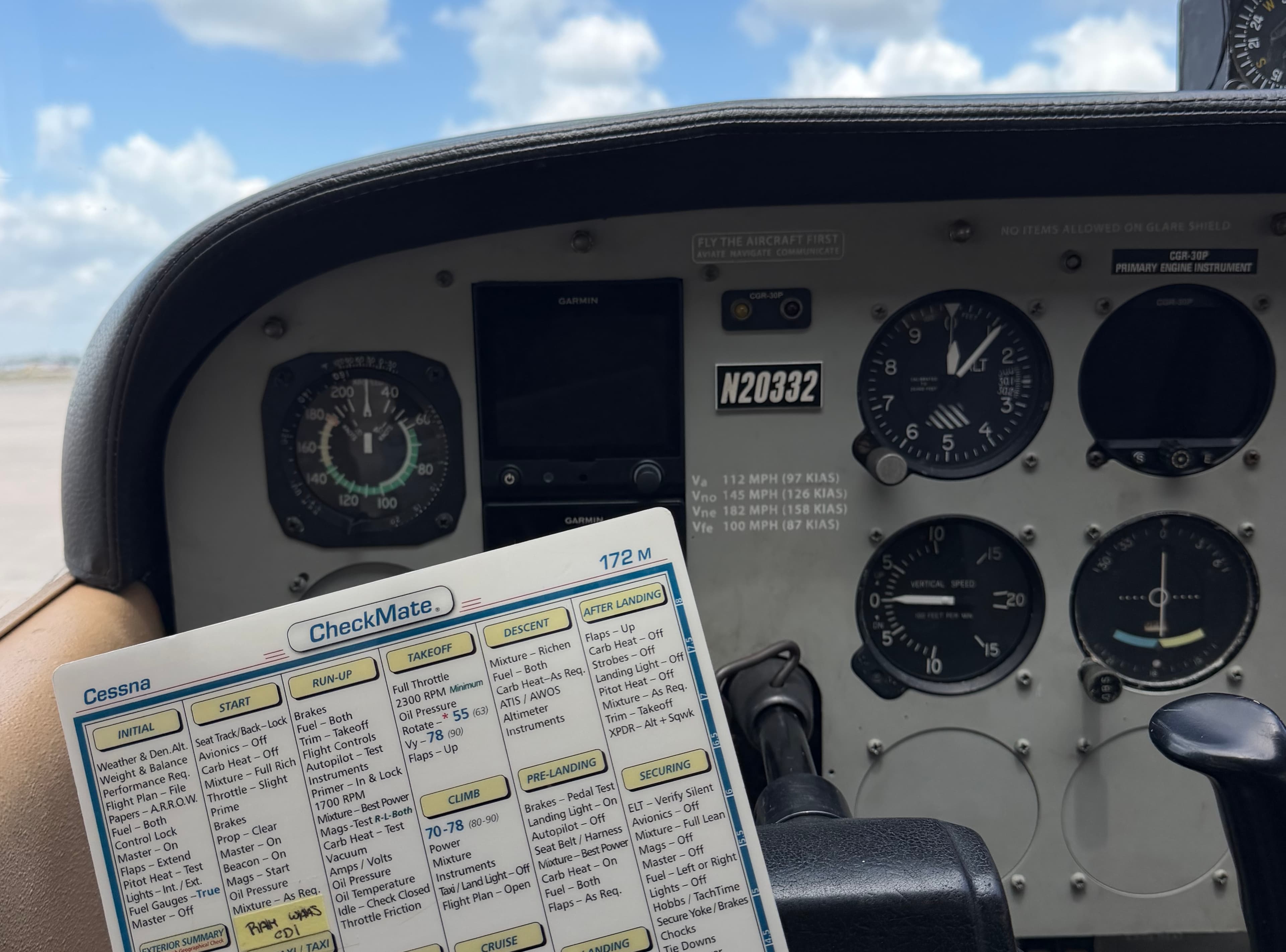
Why GoFly Recommends the C172M Checkmate Checklist
For students training in our Cessna 172 fleet, we recommend the C172M Checkmate checklist. It's laid out in a clear, logical flow that matches the way a 172 actually operates from preflight through shutdown, without unnecessary complexity that can make a checklist harder to follow under real cockpit workload.
A good checklist should be fast enough to use every time without feeling like a burden, and specific enough that it actually reflects the airplane you're flying. That combination is part of why we point students toward the Checkmate format specifically rather than a generic template.
Checklists Build Habits That Carry Into Every Aircraft
One of the more overlooked benefits of taking checklist discipline seriously early in training is that it builds a habit, not just a skill tied to one airplane.
A student who develops a genuine habit of running checklists thoroughly in a C172 carries that same discipline into the Instrument rating, into a Commercial checkride, into a CFI's own teaching, and eventually into whatever aircraft they fly professionally. Airlines don't have to teach a new hire to value checklists. They expect it to already be second nature, because it's foundational to how the entire industry operates.
Checklists as a Communication Tool, Not Just a Personal One
In aircraft flown by two pilots, whether that's a CFI and a student, or a captain and first officer at the airline level, checklists also serve as a shared reference point between two people. Reading a checklist aloud and confirming each item verbally ensures both pilots are on the same page about the aircraft's configuration, rather than each person assuming the other has checked something.
This is part of why instructors emphasize checklist usage from the very first lessons. It's not just about an individual student remembering steps. It's about building the same communication habits that will matter later when flying with another pilot in the cockpit.
A Skill Worth Taking Seriously From Day One
Checklists aren't a sign of inexperience, and they don't stop mattering once a pilot gets comfortable with an aircraft. If anything, the opposite is true: the more experienced a pilot becomes, the more they tend to appreciate exactly what a good checklist does for consistency and workload management.
For students training with us, building strong checklist habits early, with an aircraft-appropriate checklist like the C172M Checkmate, sets a foundation that carries through every stage of training and into whatever comes after.
If you're just starting flight training and want to understand how good habits like this get built from your very first lesson, we're happy to walk you through what to expect.