One of the questions we hear most from people researching flight training in Miami is some version of "when should I start?" It's a fair question, and the honest answer is that Miami's weather and traffic patterns shift enough throughout the year that timing can genuinely affect how smoothly your training goes. That doesn't mean there's a single perfect month to begin. It means understanding what each season brings so you can plan around it instead of getting surprised by it.
Winter: Stable Weather, Busier Skies
Winter in South Florida, roughly November through April, is when the weather cooperates the most. Humidity drops, thunderstorm activity all but disappears, and you get long stretches of clear, calm VFR days that are ideal for building flight hours consistently. If you're trying to knock out your private pilot certificate without weather cancellations eating into your schedule, this is generally the easiest stretch of the year to fly in.
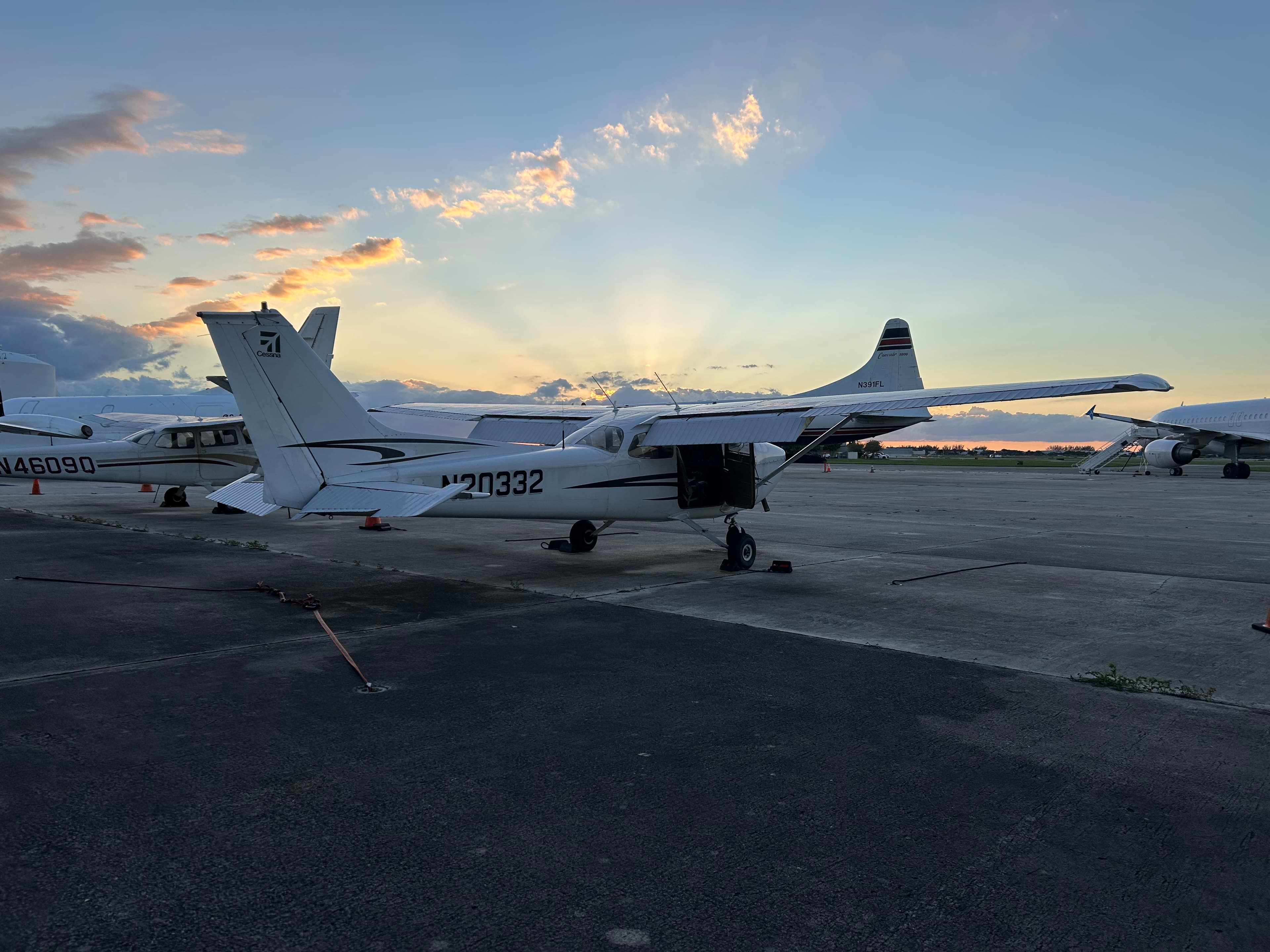
The tradeoff is traffic. Snowbird season brings a noticeable increase in general aviation activity across South Florida airports, including here at Opa-locka Executive Airport (KOPF). More transient aircraft, more pattern work from visiting pilots, and busier towered airspace mean your instructor may spend a little more time on radio communication and traffic awareness during this stretch. It's not a dealbreaker, and honestly it's good experience. Learning to operate confidently in a busier airport environment early on makes you a sharper pilot later. But if you're someone who wants your first few lessons to happen in the quietest possible airspace, winter isn't that.
Summer: Fewer Aircraft, More Weather Delays
Flip the seasons and you get the opposite tradeoff. Summer in Miami means less transient traffic since snowbirds have headed home, so the pattern and airspace tend to be quieter. That can make early lessons feel more relaxed, especially if radio work and traffic scanning feel overwhelming at first.
What summer brings instead is heat and afternoon thunderstorms. South Florida's sea breeze pattern is remarkably consistent: warm, moist air builds through the morning, and by early-to-mid afternoon you often get pop-up convective activity along the coast and inland. Mornings tend to be flyable. Afternoons often aren't. This is why a lot of summer training schedules shift toward early flights, sometimes as early as sunrise, to get ahead of the buildup.
This doesn't mean summer is a bad time to train. Plenty of students fly through the entire summer with a schedule built around morning slots. It just means flexibility matters more, and cancellations due to weather are simply part of the rhythm rather than the exception.
Learning to Read Sea Breeze Patterns
If there's a silver lining to summer training, it's this: learning to read a Florida sea breeze front is a skill that will serve you for the rest of your flying career. Understanding how the timing, direction, and intensity of these afternoon buildups shift day to day teaches weather judgment that a lot of pilots trained in more stable climates never have to develop early on. Students who train through a South Florida summer often come out of it with sharper go/no-go decision-making than those who only ever flew in clear, stable conditions.
Spring and Fall: The Transition Windows
The shoulder seasons, roughly October through November and April through May, tend to offer a bit of both worlds. Thunderstorm activity is winding down or hasn't fully ramped up yet, snowbird traffic is either arriving or thinning out, and temperatures are more moderate. These windows can be a good compromise if you're trying to avoid the extremes of peak summer heat or peak winter congestion.
So When Should You Actually Start?
Here's the practical answer: the best time to start is whenever you're ready, because every season in Miami has a rhythm you can train around. What matters more than the calendar is how your schedule adapts to it. A flexible training pace, one where lessons aren't rigidly locked to a fixed weekly slot, lets you take advantage of good weather when it shows up and avoid burning lesson time on cancellations you can't control. That's part of why Part 141 programs built around stage checks, rather than a strict lockstep schedule, tend to handle Florida's seasonal swings better than a rigid one-lesson-per-week structure.
If you're weighing a summer start against a winter one, know that neither path is objectively better. Winter gets you more flyable days but busier airspace. Summer gets you calmer skies but a schedule built around the clock. Both produce capable, well-rounded pilots, and you'll more than likely be flying year-round once you start your training. Being able to adapt and plan for different weather patterns will ultimately make you a safer and more aware pilot
If you're thinking about starting flight training in Miami and want to talk through how seasonal timing might affect your schedule, we're happy to walk through it with you.