Training With or Without Autopilot: Which Makes Better Pilots?
One of the more common questions we hear from prospective students is whether learning in an airplane with autopilot makes training easier, or whether students should avoid it altogether while building fundamentals.
There is a pretty strong opinion in aviation that student pilots should hand fly everything and stay away from automation until much later in training. At the same time, modern aircraft continue becoming more advanced, and many of the airplanes students eventually transition into are equipped with increasingly capable avionics and autopilot systems. It raises a fair question: if technology is part of modern flying, should students learn with it from the beginning?
The answer is not as simple as choosing one over the other.
What Flight Training Is Actually Teaching
When most people picture flight training, they imagine learning how to take off, land, and navigate. Those skills are important, but early training is really about developing an understanding of how the airplane behaves and learning to manage it confidently.
Students are learning how control inputs affect performance, how to maintain awareness of altitude and airspeed, how to think ahead of the airplane, and how to make decisions under changing conditions. Those habits are built through repetition and experience.
Hand flying plays an important role in that process because it forces students to stay engaged with what the airplane is doing. Over time, students begin recognizing patterns instead of reacting to outcomes. They become more comfortable making small corrections and understanding why those corrections matter.
That foundation tends to make every later stage of training easier.
Why Autopilot Still Matters
At the same time, avoiding autopilot entirely does not necessarily reflect the reality of modern aviation.
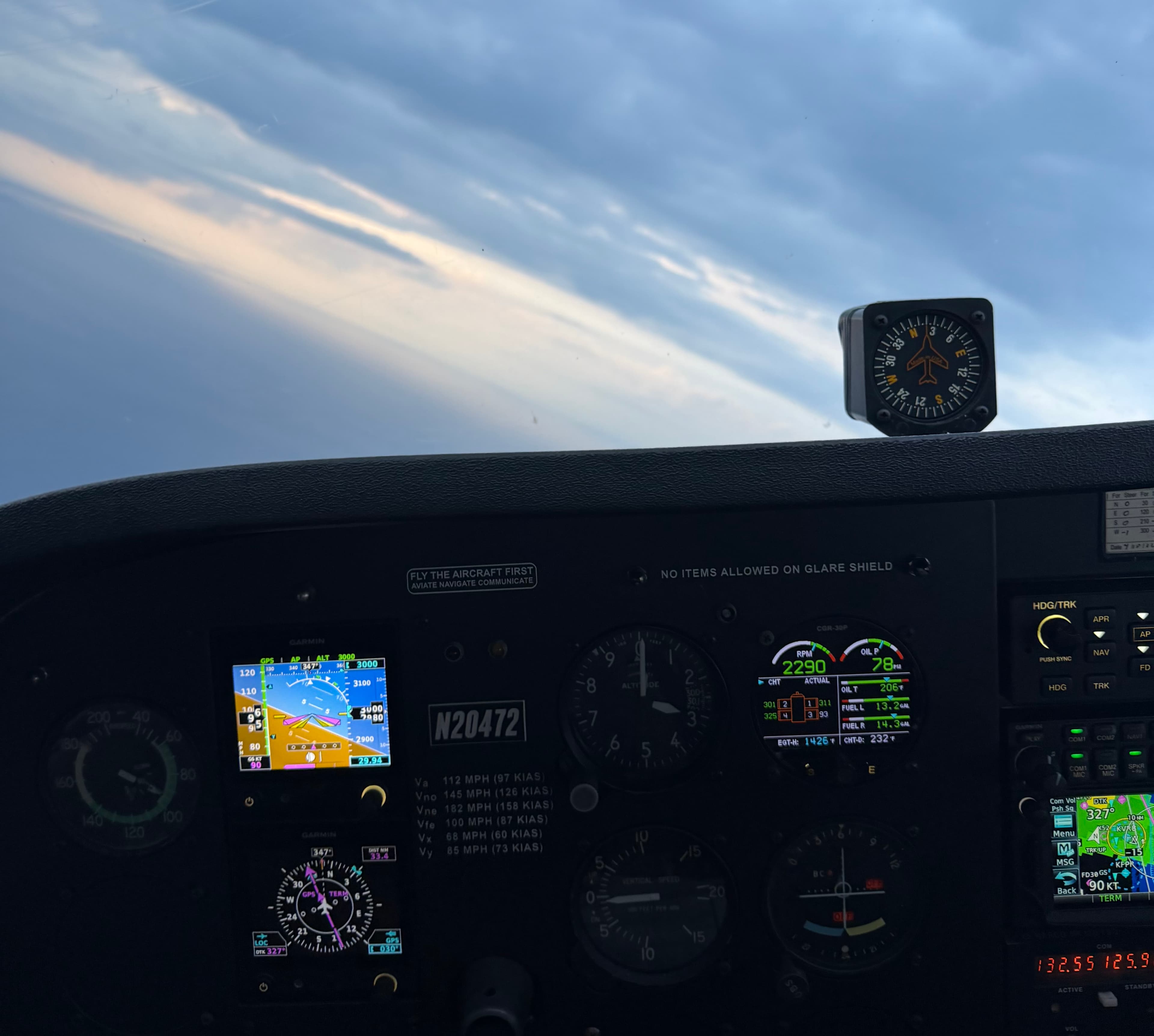
Today, many personal aircraft and training aircraft are equipped with sophisticated avionics and automation. Knowing how to operate those systems safely is part of becoming a more capable pilot.
Autopilot can reduce workload during periods of high task saturation, help pilots maintain situational awareness, and allow more attention to be directed toward weather, navigation, communication, and planning. For students who eventually plan to fly cross countries regularly, pursue instrument training, or transition into more advanced aircraft, exposure to automation can become a valuable part of training.
However, the benefit only exists when the pilot understands what the airplane is doing in the background.
A pilot who activates autopilot because they intentionally want to manage workload is in a very different position than a pilot who uses it because they are struggling to keep up.
Training in Aircraft You May Actually Fly
One thing we believe strongly at GoFly Academy is that training should reflect real-world flying.That does not mean replacing fundamentals with automation. It means exposing students to both.
Our fleet includes multiple aircraft equipped with autopilot and modern avionics so students can become familiar with the technology they are likely to encounter beyond training. Students have opportunities to train in aircraft including our TAA-equipped Cessna 172, Cessna 162, and Cirrus SR20, all equipped with autopilot capabilities.
That variety allows students to experience different aircraft philosophies while still building strong foundational flying skills. Whether flying a more traditional training profile or learning to manage a more advanced cockpit environment, the goal stays the same: understand the airplane first, then use technology to support good flying.
Our Approach at GoFly Academy
At GoFly Academy, we focus first on helping students develop strong aircraft control, confidence, and decision making. As students progress, technology becomes another tool that supports those skills rather than replacing them.
Learning to fly is not about choosing traditional methods or modern technology. It is about understanding both and knowing when each one is appropriate.
If you have been considering starting flight training and want to experience it firsthand, a discovery flight is one of the best places to begin. Getting into the cockpit and seeing how training actually works provides a much clearer picture than reading about it.
You may find that the question is not whether autopilot makes a better pilot, but how good training teaches pilots to use every tool available.
Finding the Right Balance
Autopilot should be a part of a pilot's initial training but should not be an obstacle for students developing their stick-and-rudder skills. As a student progresses through their training they should learn how to use automation to prepare for a career in professional aviation.